
Key Takeaways
• Bunions, corns, and gout can all cause pain in the toe or foot.
• Bunions involve a structural deformity of the big toe joint.
• Corns are thickened skin caused by repeated friction or pressure.
• Gout is a type of inflammatory arthritis caused by uric acid buildup.
• Each condition requires a different treatment approach.
• A podiatrist can diagnose the exact cause of toe pain.
Book an Appointment(opens in a new tab)
Why Toe Pain Can Be Confusing
Pain near the toes can come from several different conditions. Because bunions, corns, and gout may all cause discomfort in similar areas of the foot, many people assume they are experiencing the same problem.
However, these conditions are very different.

Bunions involve structural changes in the bones of the foot, while corns affect the skin and gout affects the joints through inflammation.
Understanding the differences can help patients seek the right treatment before symptoms worsen.
What Is a Bunion?
A bunion(opens in a new tab) is a deformity of the joint at the base of the big toe. It occurs when the big toe gradually shifts toward the second toe, causing the joint to protrude outward.
Over time, this misalignment may lead to swelling, stiffness, and difficulty wearing shoes.
People who notice the earliest symptoms often begin with signs similar to those explained in Early Signs of a Bunion: How to Spot the Problem Before It Gets Worse(opens in a new tab).
Common bunion symptoms include:
a visible bump at the base of the big toe
pain around the joint
redness or swelling
difficulty wearing tight shoes
Many patients benefit from early evaluation through professional Bunion Treatment(opens in a new tab) services before the condition becomes severe.
You can also learn more about the underlying causes of bunions in What Causes Bunions? Understanding Why Bunions Form(opens in a new tab).
What Is a Corn?
A corn is a thickened area of skin that develops due to repeated pressure or friction. Unlike bunions, corns are not structural deformities.
They often appear on the tops or sides of toes and can feel painful when pressed.
Corns are typically caused by:
tight footwear
abnormal foot mechanics
repeated friction against the skin
pressure from overlapping toes
Although corns may look similar to bunions at first glance, they are usually much smaller and affect the skin rather than the joint.
What Is Gout?
Gout is a form of inflammatory arthritis that occurs when uric acid crystals accumulate in the joints.
The condition often affects the big toe joint and can cause sudden and intense pain.
Common symptoms of gout include:
sudden severe pain in the big toe
redness and warmth around the joint
swelling and tenderness
pain that may occur overnight
Unlike bunions or corns, gout episodes often appear suddenly and may feel extremely painful.
Key Differences Between Bunions, Corns & Gout
Understanding the differences between these conditions can help determine the right treatment.
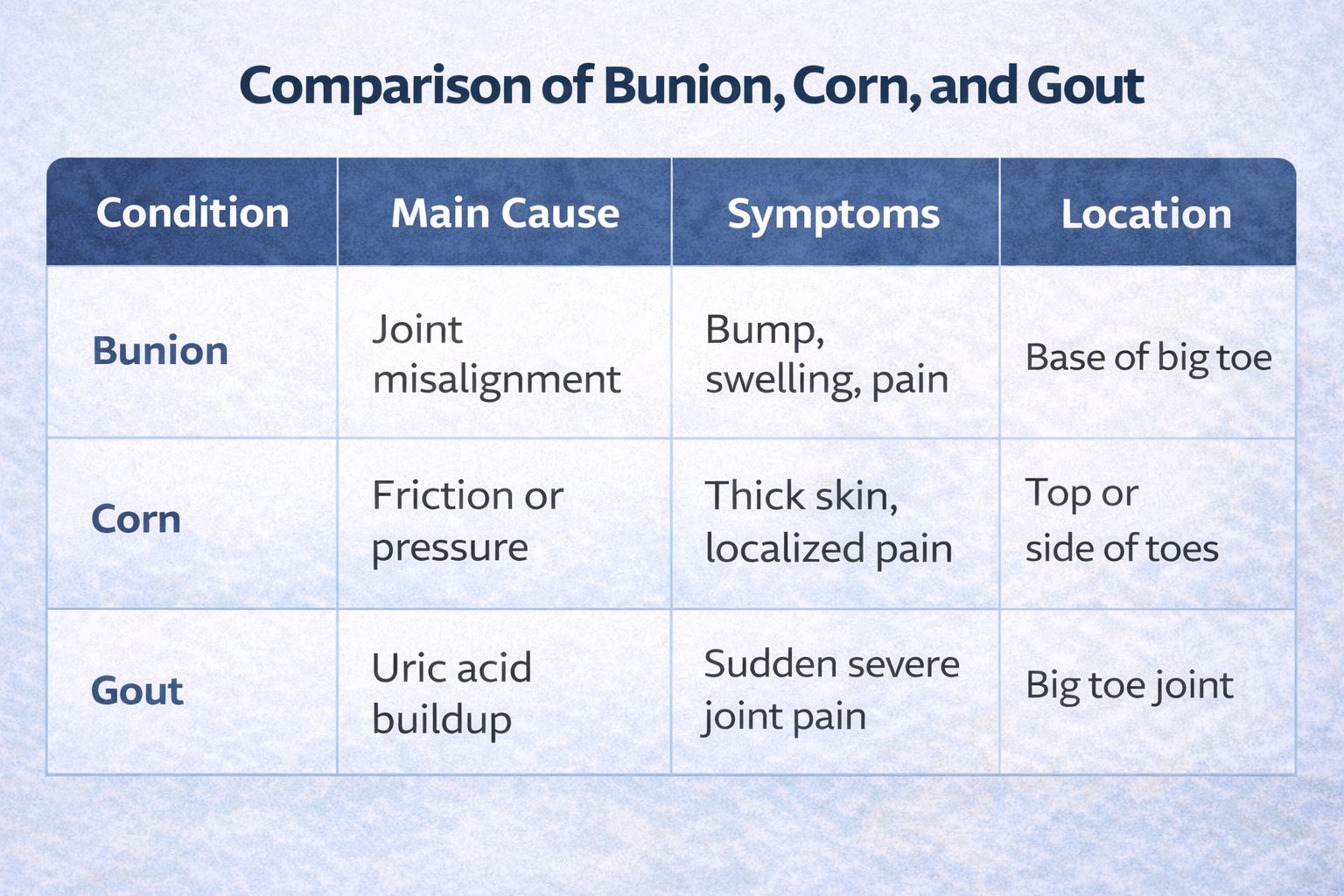
Although symptoms may overlap, the underlying causes are very different.
How Doctors Diagnose Toe Pain
A podiatrist can usually diagnose the cause of toe pain through a physical examination.
Diagnostic methods may include:
physical evaluation of the foot
review of symptoms and medical history
imaging tests such as X-rays
laboratory tests for gout
Accurate diagnosis ensures the correct treatment approach.
Treatment Options for Each Condition
Treatment varies depending on the underlying condition.
Bunion Treatment
Treatment may include orthotics, footwear modifications, and anti-inflammatory care. Severe bunions may require surgical correction such as Bunion Removal Surgery(opens in a new tab).
Corn Treatment
Corns are often treated by removing pressure on the affected area.
Common treatments include:
better-fitting shoes
protective pads
removing thickened skin
orthotics to improve foot mechanics
Gout Treatment
Gout treatment focuses on reducing inflammation and lowering uric acid levels.
This may include:
medications
lifestyle changes
dietary adjustments
When Should You See a Podiatrist?
If you experience persistent toe pain or swelling, it is important to seek medical evaluation.
You should consider seeing a specialist if:
toe pain interferes with walking
swelling persists for several days
the toe joint becomes severely inflamed
you notice structural changes in the foot
Early evaluation through professional Bunion Treatment(opens in a new tab) may help prevent long-term complications.
You can also learn more about when medical care may be necessary in When Should You See a Podiatrist for a Bunion? Signs It’s Time for Treatment(opens in a new tab).
Book an Appointment(opens in a new tab)
Frequently Asked Questions
How can you tell the difference between a bunion and a corn?
A bunion is a bony bump at the base of the big toe joint, while a corn is a thickened area of skin caused by pressure.
Can gout look like a bunion?
Yes. Gout often affects the big toe joint and may cause swelling and redness similar to bunion inflammation.
Are bunions more painful than corns?
Bunions may cause chronic discomfort, while corns usually cause localized pain when pressure is applied.
Can corns lead to bunions?
No. Corns do not cause bunions, but both conditions may develop from similar footwear issues.
Should toe pain always be checked by a doctor?
Persistent or severe toe pain should be evaluated by a specialist to determine the underlying cause and prevent complications.
Do bunions get worse over time?
Many bunions gradually worsen as the joint continues to shift out of alignment and may require bunionplasty upon diagnosis.
