
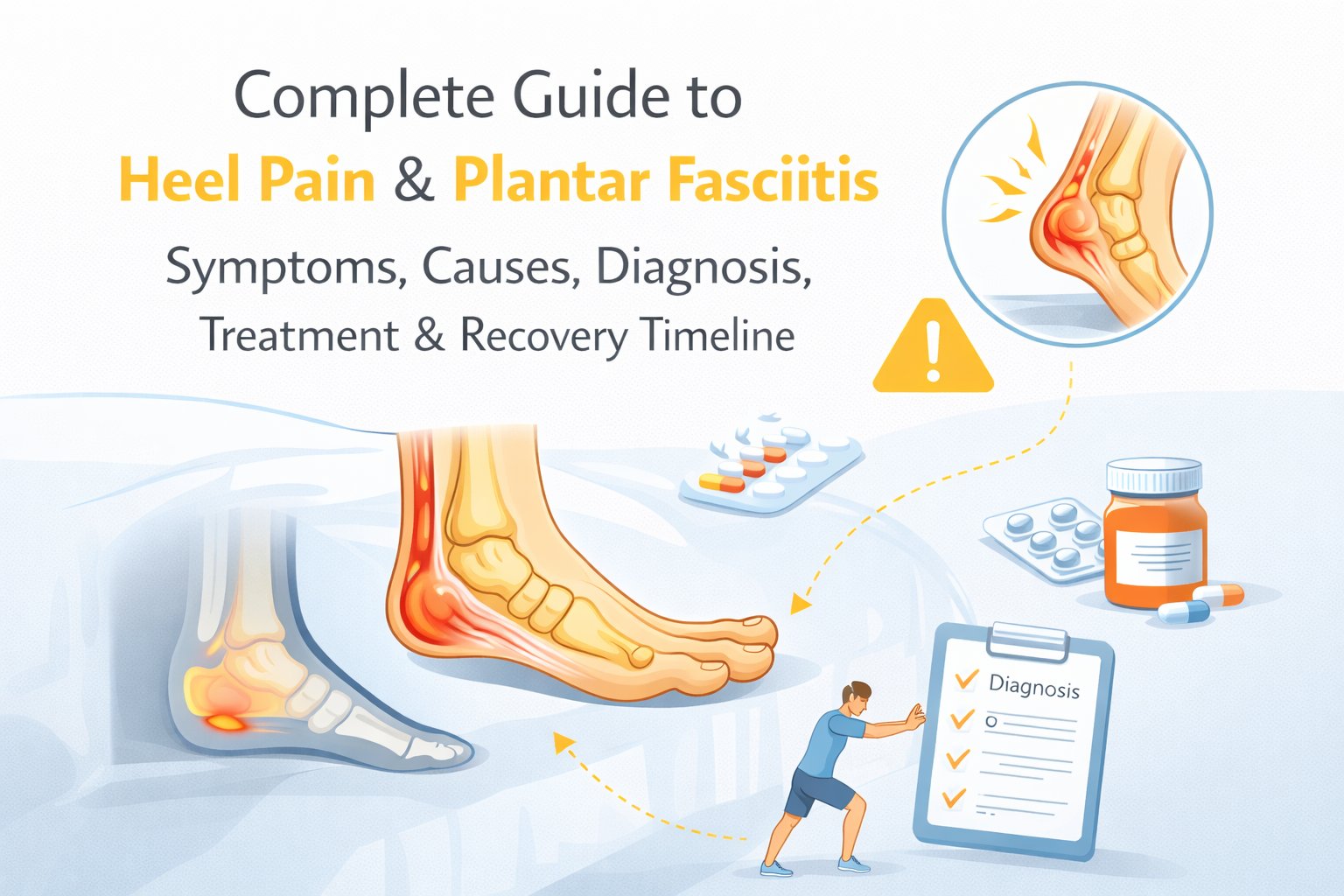
Key Takeaways
Plantar fasciitis is the most common cause of heel pain.
Morning heel pain is a hallmark symptom.
Bottom of heel pain often signals inflammation of the plantar fascia.
Heel spurs and plantar fasciitis are related but different conditions.
Most cases improve with conservative treatment.
Custom orthotics can significantly reduce strain.
Persistent pain should be evaluated by a podiatrist.
Book an Appointment(opens in a new tab)
Understanding Heel Pain: A Comprehensive Overview
Heel pain is one of the most common foot conditions affecting adults. It can interfere with walking, standing, exercising, and even basic daily activities. The discomfort may feel sharp, stabbing, dull, or burning depending on the underlying cause.
While many conditions can cause heel pain, plantar fasciitis accounts for the majority of cases.
Heel pain typically presents as:
Pain in the bottom of the heel
Pain when taking the first steps in the morning
Heel pain when walking
Pain after prolonged standing
Tenderness under the heel bone
The key to effective treatment is identifying the specific cause.
If you are unsure whether your symptoms match plantar fasciitis, review Do I Have Plantar Fasciitis? Here’s How to Tell(opens in a new tab) for a deeper symptom breakdown.
What Is Plantar Fasciitis?
Plantar fasciitis is inflammation or degeneration of the plantar fascia — a thick band of connective tissue that runs from your heel bone to your toes. This structure supports the arch and absorbs shock.
When excessive strain causes microtears in the tissue, pain develops.
Plantar fasciitis is commonly associated with:
Runners
Individuals who stand for long periods
People with flat feet
Those with high arches
Individuals wearing unsupportive footwear
Symptoms of Plantar Fasciitis
The most common symptoms include:
Sharp pain in the bottom of the heel
Heel pain in the morning
Pain after sitting for extended periods
Pain that improves with movement but worsens later
Tenderness along the arch
Morning heel pain is especially significant because the plantar fascia tightens overnight. The first steps stretch the tissue suddenly, causing discomfort.
Bottom of Heel Pain: What Does It Mean?
Bottom of heel pain is typically associated with plantar fasciitis, but other causes exist:
Heel fat pad syndrome
Stress fracture
Nerve entrapment
Inflammatory arthritis
Heel spur formation
Pain directly under the heel bone often points toward plantar fascia irritation.
If your pain is related to inflammation caused by repetitive strain, understanding the common risk factors is important. You can explore these in Top 5 Causes of Plantar Fasciitis & How to Reduce Your Risk(opens in a new tab).
Heel Pain in the Morning
Morning heel pain is one of the most frequently searched heel-related concerns.
It occurs because:
The plantar fascia shortens during sleep
Inflammation increases overnight
Sudden weight-bearing stretches irritated tissue
If morning pain persists for several weeks, professional evaluation is recommended.
Heel Spur vs Plantar Fasciitis
Many patients assume heel spurs are the primary cause of heel pain.
However, heel spurs are bony growths that develop over time due to chronic strain.
Plantar Fasciitis:
Soft tissue inflammation
Pain worst in the morning
Usually improves with stretching
Heel Spur:
Bony projection from the heel bone
Often seen on X-ray
May not cause symptoms
They frequently coexist, but plantar fasciitis is typically the source of pain.
What Causes Heel Pain?
Common contributing factors include:
Tight calf muscles
Excess body weight
Poor footwear
Flat feet or high arches
Sudden increase in physical activity
Repetitive strain
Biomechanics play a major role. That’s where custom orthotics can help improve alignment and reduce stress on the plantar fascia.
You can learn how they function in How Custom Orthotics Adjust to Different Foot Shapes(opens in a new tab) and whether they are effective and Can Custom Orthotics Help Plantar Fasciitis?(opens in a new tab).
For treatment options, learn about Plantar Fasciitis(opens in a new tab) to understand how the condition is evaluated and managed.
Diagnosing Heel Pain
Diagnosis begins with:
Medical history
Physical examination
Palpation of the heel
Range-of-motion testing
Gait analysis
Imaging may be recommended if a stress fracture or more serious condition is suspected.
Treatment Options for Heel Pain
Conservative Treatment
Most heel pain improves without surgery.
Treatment may include:
Stretching exercises
Icing
Rest
Night splints
Anti-inflammatory medication
Supportive footwear
Custom orthotics
Custom orthotics(opens in a new tab) help redistribute pressure and reduce strain on the plantar fascia.
Shockwave Therapy vs Surgery
If conservative treatment does not provide relief, additional options may be considered.
Shockwave therapy can stimulate tissue healing and reduce chronic inflammation. In rare cases, surgical intervention may be necessary.
You can explore the full comparison of these options in Shockwave Treatment vs Surgery for Plantar Fasciitis(opens in a new tab).
How Long Does Plantar Fasciitis Last?
Recovery depends on severity and consistency of treatment.
1. Mild cases: 4–6 weeks
2. Moderate cases: 2–3 months
3. Chronic cases: 6–12 months
Following a structured treatment plan significantly improves outcomes.
When Should You See a Podiatrist?
Seek evaluation if:
Pain lasts more than two weeks
Morning pain worsens
Walking becomes difficult
Swelling increases
Numbness or tingling develops
For a professional assessment and treatment plan, consult a podiatrist about Plantar Fasciitis(opens in a new tab) treatment.
Related Conditions That May Mimic Heel Pain
Not all heel pain originates from the plantar fascia.
Other possibilities include:
Achilles tendonitis
Nerve compression
Stress fracture
Inflammatory arthritis
For Achilles-related discomfort, read and become aware on How to Manage Pain and Swelling from Achilles Tendonitis(opens in a new tab).
Preventing Heel Pain
Preventive strategies include:
Daily calf stretching
Maintaining a healthy weight
Wearing supportive footwear
Using custom orthotics
Avoiding sudden increases in activity
Orthotics may also improve posture and reduce strain, as explained in How Orthotics Improve Posture and Prevent Future Injuries(opens in a new tab).
Book an Appointment(opens in a new tab)
Frequently Asked Questions
What is the most common cause of heel pain?
Plantar fasciitis is the leading cause of heel pain.
Why does heel pain feel worse in the morning?
The plantar fascia tightens overnight and stretches suddenly when you stand.
Is a heel spur the same as plantar fasciitis?
No. A heel spur is a bony growth, while plantar fasciitis involves inflammation of soft tissue.
How long does plantar fasciitis take to heal?
Most cases improve within 4–12 weeks with proper treatment.
Do custom orthotics help heel pain?
Yes. Orthotics redistribute pressure and reduce stress on the plantar fascia.
When should I see a podiatrist for heel pain?
If pain persists beyond two weeks or interferes with walking, professional evaluation is recommended.
