
Key Takeaways
- Plantar fasciitis flare-ups often strike during travel, long workdays, or exercise, when the foot suddenly faces more standing, walking, or activity than usual.
- Supportive, well-fitting footwear is one of the most effective ways to reduce strain on the plantar fascia in any setting.
- Simple habits, such as taking walking breaks, stretching the calves, and easing into new activity levels, can help prevent flare-ups before they start.
- Recognizing early warning signs, like morning heel pain or discomfort after standing, allows you to adjust your routine before symptoms worsen.
- Paragon Podiatry's podiatrists in Manhattan, the Bronx, and East Setauket, NY help patients build personalized prevention plans, and you can request an appointment if heel pain is already slowing you down.
Why Plantar Fasciitis Flares Up at the Worst Times
Plantar fasciitis develops when the band of tissue supporting the arch, called the plantar fascia, becomes irritated from overuse or strain. According to the Mayo Clinic, risk increases with factors that put extra strain on the feet, including obesity, high-impact activity, and faulty foot mechanics such as flat feet or high arches. Mayo Clinic also notes that risk rises when someone suddenly increases their activity level, such as walking and standing more than usual while on vacation, which is exactly why flare-ups so often show up during travel, busy workweeks, or a new workout routine.
Travel Tips: Protecting Your Feet at Airports and on Long Walking Days
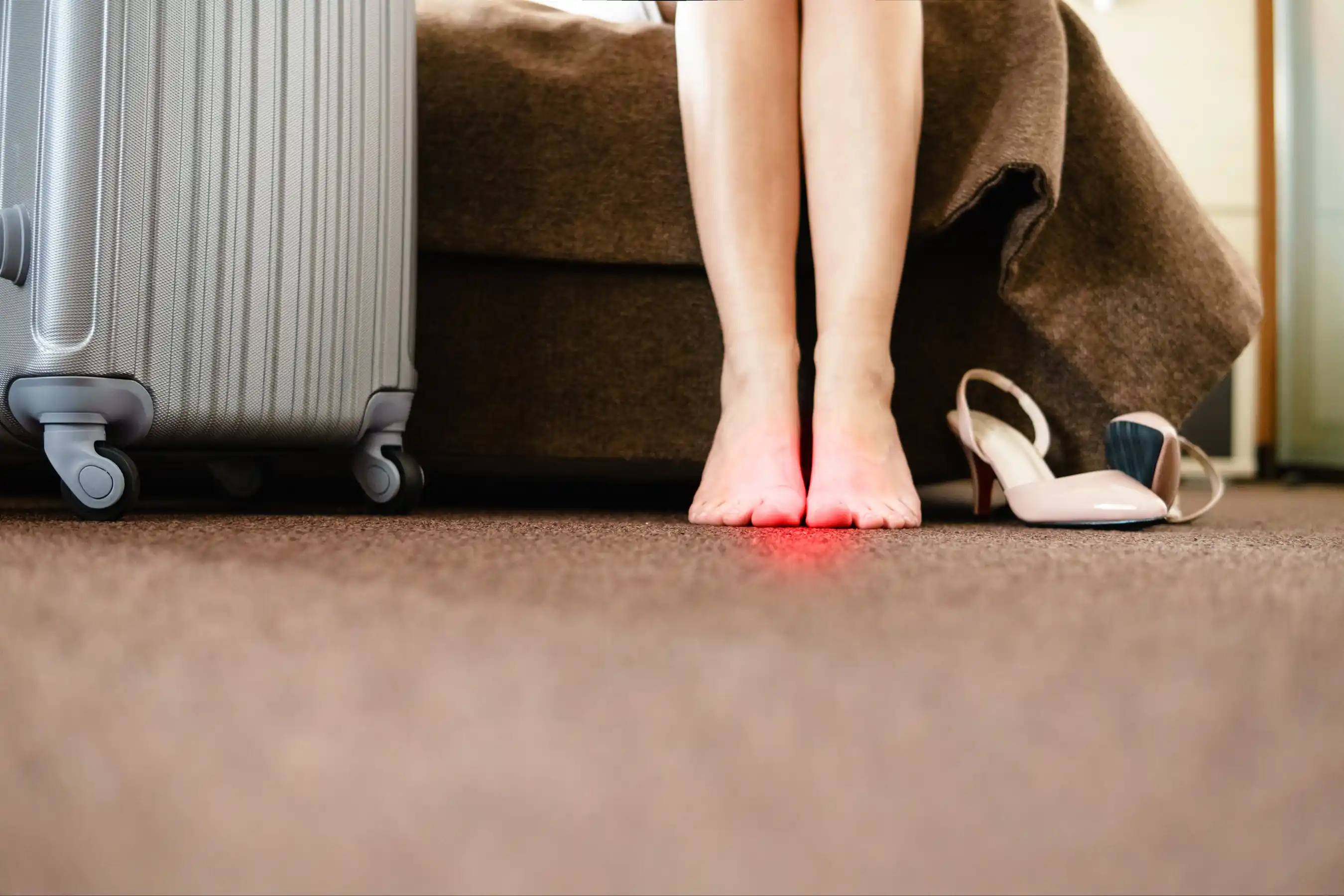
Travel days often mean hours of walking on hard airport floors, cobblestone streets, or unfamiliar terrain, all in shoes that were not chosen with support in mind.
- Choose supportive, hard-soled shoes for travel days instead of flats or sandals.
- Take short walking breaks and stretch the calves during long layovers or road trips.
- Pack a familiar pair of broken-in shoes rather than relying on new footwear for a big trip.
- Avoid going barefoot on hotel room floors or pool decks, which offer no arch support.
Workplace Habits That Reduce Strain
Jobs that require standing or walking on hard floors for long shifts are a known risk factor for plantar fasciitis. Simple adjustments at work can make a meaningful difference:
- Add cushioned mats in areas where you stand for long periods.
- Choose supportive, closed-toe shoes over fashion-forward options during work hours.
- Take short seated breaks throughout the day to relieve pressure on the heel.
- Stretch the calves and the bottom of the foot before and after a shift.
Safe Ways to Stay Active Without Triggering Pain
Exercise is important, but a sudden jump in mileage, intensity, or a new sport can overload the plantar fascia. Mayo Clinic Health System notes that plantar fasciitis is most common in middle-aged, active adults, and that additional risk factors include obesity, occupations that keep you on your feet all day, and flat feet or high arches. To stay active safely:
- Increase running or walking distance gradually rather than all at once.
- Warm up with calf and foot stretches before high-impact workouts.
- Cross-train with lower impact activities like swimming or cycling when symptoms flare.
- Replace worn-out athletic shoes regularly, since worn cushioning reduces shock absorption.
Footwear Strategies for Different Environments
| Setting | Footwear Priority | What to Avoid |
|---|---|---|
| Travel | Supportive, hard-soled shoes | Flip-flops or unbroken-in new shoes |
| Work | Cushioned, closed-toe shoes | Flat-soled fashion shoes for long shifts |
| Exercise | Athletic shoes matched to activity | Worn-out or unsupportive running shoes |
Early Warning Signs of a Flare-Up
Catching a flare-up early makes it easier to manage. Watch for:
- Stabbing heel pain with your first steps in the morning.
- Pain that returns after standing up from sitting for a while.
- Discomfort that builds the longer you stand or walk during the day.
- Tightness in the calf or Achilles tendon alongside heel pain.
If these signs appear, scaling back activity and reinforcing supportive footwear can often prevent a full flare-up.
Prevent Plantar Fasciitis Wherever Life Takes You
Whether you're catching a flight, working a long shift, or training for your next race, protecting your feet comes down to the same basics: supportive footwear, gradual activity changes, and listening to early warning signs.
If heel pain has already started to interrupt your travel, work, or workouts, request an appointment with Paragon Podiatry for plantar fasciitis treatment at the Manhattan, Bronx, or East Setauket location.
Frequently Asked Questions
What are the best plantar fasciitis exercises for prevention?
Calf stretches, towel scrunches to strengthen the arch, and gentle toe stretches are commonly recommended to help prevent plantar fasciitis. Performing these stretches consistently, especially before activity, helps keep the plantar fascia flexible and less prone to strain.
How can I avoid heel pain while traveling?
Wearing supportive, hard-soled shoes, taking regular walking breaks, and avoiding long stretches barefoot on hard floors can all help avoid heel pain during travel.
Does exercise cause plantar fasciitis, or does it help prevent it?
Exercise itself does not cause plantar fasciitis, but a sudden increase in high impact activity is a known risk factor. Gradual training increases, proper footwear, and stretching can make exercise part of a prevention plan rather than a trigger.
How do I know if my heel pain is turning into plantar fasciitis?
Early signs include sharp heel pain with your first steps in the morning, pain that returns after sitting, and discomfort that worsens the longer you are on your feet. These symptoms warrant a conversation with a podiatrist before the condition worsens.
Where can I find plantar fasciitis prevention care near me?
Paragon Podiatry offers plantar fasciitis care at its Manhattan, Bronx, and East Setauket locations. Patients can request an appointment online to discuss a prevention plan tailored to their travel, work, or exercise routine.
