
Key Takeaways
- Calluses form when the skin thickens to protect itself from repeated friction and pressure.
- Shoes that fit poorly, long hours on your feet, high heels, going barefoot, and the way you walk are common causes.
- Foot shapes such as bunions and hammertoes can create pressure points that make calluses more likely.
- Most calluses are harmless, but painful, cracked, or infected calluses need a professional exam.
- Paragon Podiatry treats calluses and the pressure problems behind them in Manhattan, the Bronx, and East Setauket, and patients can request an appointment for a personalized plan.
How Calluses Form on the Feet
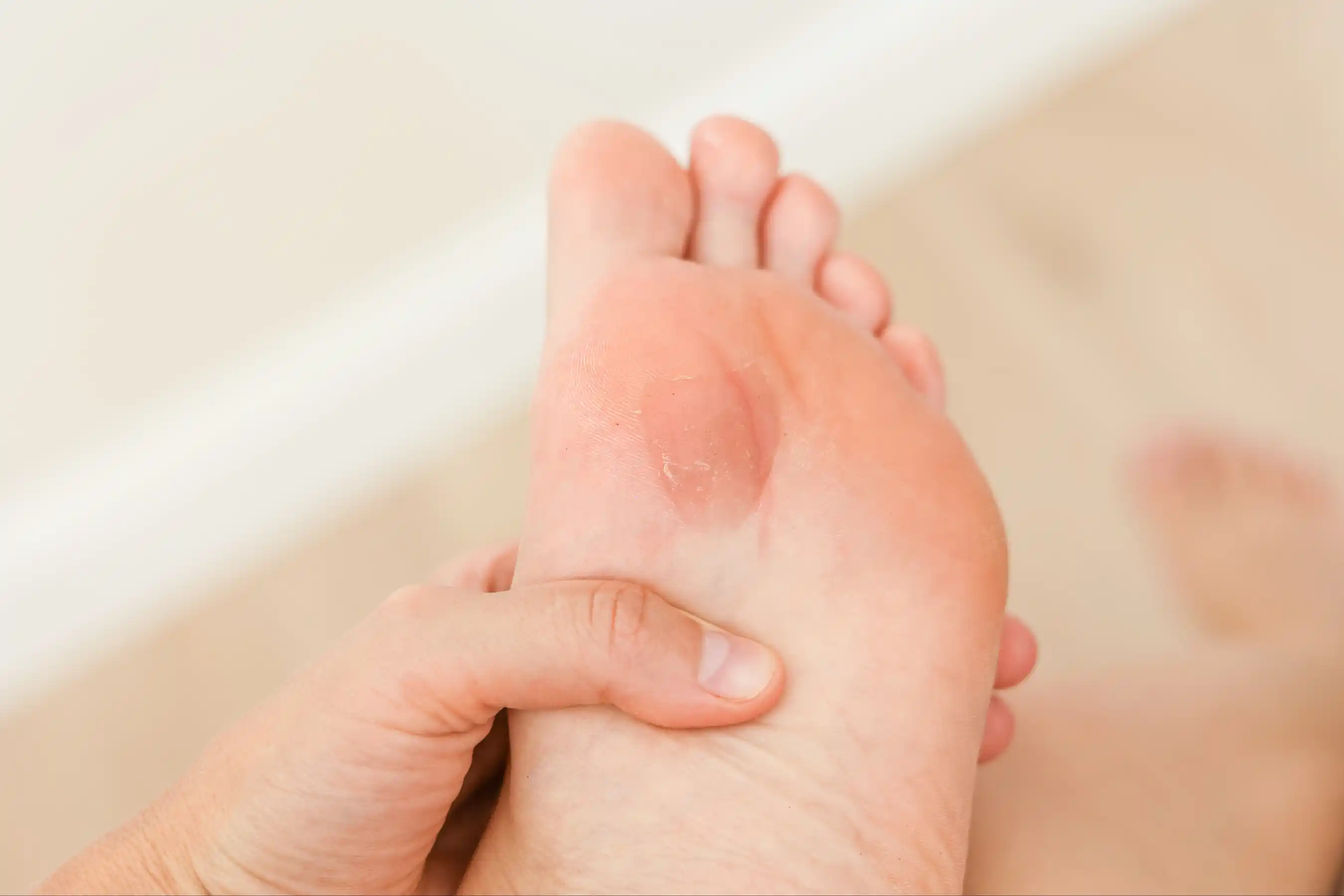
A callus is a thick, hard patch of skin. Your body builds it on purpose. When one spot of skin faces repeated rubbing or pressure, the skin thickens to protect the tissue underneath.
Calluses most often show up on the parts of the foot that carry your weight. That includes the heels, the balls of the feet, the big toes, and the sides of the feet. A small amount of callus on the bottom of the foot is normal.
Calluses are not caused by a virus, and they are not contagious. They come from friction and pressure.
Common Causes of Calluses on the Feet
Many everyday habits create the rubbing and pressure that lead to calluses. Here are the most common ones.
Shoes That Do Not Fit Well
Tight shoes squeeze the foot. Loose shoes let the foot slide and rub. Both can irritate the same spot day after day. High heels shift weight onto the ball of the foot, which is why they often lead to calluses there.
Long Hours of Standing, Walking, or Running
Jobs and hobbies that keep you on your feet add up to thousands of steps of pressure. Runners, nurses, retail workers, and teachers often notice calluses for this reason.
Going Barefoot or Skipping Socks
Bare feet rub directly against the ground or the inside of a shoe. Socks that slip or bunch up under the foot can cause the same problem.
How You Walk
Gait is the way you walk. If you roll too far toward the inner or outer edge of your foot, extra pressure lands on one area. Over time, that area builds a callus.
Foot Shape and Foot Conditions
Some foot shapes make calluses more likely. Bunions, hammertoes, bone spurs, and arthritis can change how the bones line up. That shift can create pressure points that were not there before. Losing some of the natural padding in the foot can also play a role.
Why Some People Develop Calluses More Than Others
Two people can wear the same shoes and walk the same distance, yet only one gets calluses. The difference often comes down to foot structure, gait, and shoe fit. The table below shows how each cause creates pressure.
| Cause | How It Creates Pressure | Where Calluses Often Appear |
|---|---|---|
| Tight or narrow shoes | Squeezes and rubs the foot | Sides of the feet and toes |
| High heels | Pushes body weight forward | Ball of the foot |
| Bunions or hammertoes | Shifts bones out of line | Big toe and joints of the toes |
| Uneven walking pattern | Overloads one edge of the foot | Inner or outer edge, heel |
| No socks or bunched socks | Adds friction against skin | Heels and soles |
When a Callus Needs Professional Care
Most calluses cause no trouble. A callus should be checked when it becomes painful, cracks open, or looks red or swollen. Oozing or pus can signal an infection.
People with diabetes or poor blood flow should not treat calluses on their own. Even a minor foot injury can turn into an infected sore for these patients. Learn more about when to see a podiatrist for calluses.
At Paragon Podiatry, callus care focuses on the cause, not just the skin. Treatment can include debridement, which means the careful removal of thickened skin by a clinician. It can also include custom orthotics, which are shoe inserts made for your feet, and guidance on preventing new pressure spots. Explore foot skin condition treatment at Paragon Podiatry to see what is offered.
Ease Callus Pain With a Podiatrist in New York City
Calluses form for clear reasons: friction, pressure, shoes, gait, and foot structure. Finding the cause is the key to getting lasting relief.
To find out what is behind your calluses, request a callus evaluation with Paragon Podiatry. Patients can choose the Manhattan, Bronx, or East Setauket office, and the team at Paragon Podiatry will build a plan around your feet.
Frequently Asked Questions
What causes calluses on the feet?
Repeated friction and pressure cause calluses. Poor shoe fit, long hours standing or walking, high heels, going barefoot, an uneven gait, and foot conditions like bunions are the most common triggers.
Are calluses on my feet dangerous?
Most calluses are harmless. They can become a problem if they crack, hurt, or get infected. People with diabetes or poor circulation should have a podiatrist check any callus.
Can my shoes cause calluses?
Yes. Shoes that are too tight, too loose, or have rough seams can rub the skin. High heels also push pressure onto the ball of the foot.
Why do I get calluses on the ball of my foot?
The ball of the foot carries a lot of weight. High heels, an uneven walking pattern, and some foot shapes can increase pressure there.
How do I find a podiatrist near me for painful callus treatment?
Paragon Podiatry treats painful calluses at its Manhattan, Bronx, and East Setauket locations. Patients can request an appointment online or view office locations and phone numbers.
