Key Takeaways
Bottom of heel pain is most commonly caused by plantar fasciitis.
Pain often feels sharp when walking or taking the first steps in the morning.
Inflammation of the plantar fascia is the primary cause of pain under the heel bone.
Orthotics and stretching exercises are common conservative treatments.
Persistent heel pain should be evaluated by a podiatrist.
Early treatment can prevent chronic plantar fascia damage.
Book an Appointment(opens in a new tab)
Understanding Bottom of Heel Pain
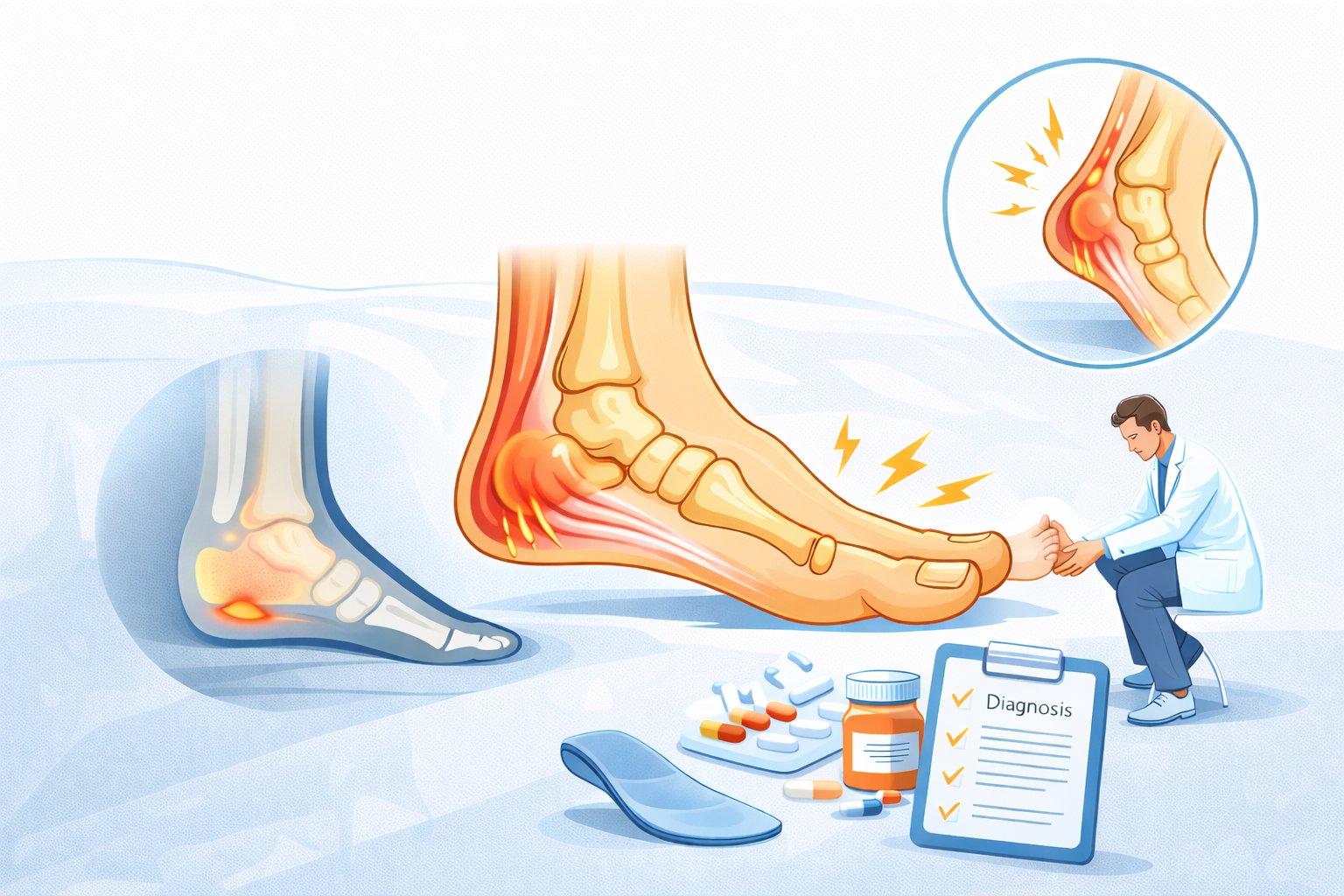
Pain at the bottom of the heel is one of the most common foot complaints among adults. The discomfort can make it difficult to walk, exercise, or even stand for long periods.
In many cases, bottom heel pain develops gradually due to repetitive strain placed on the plantar fascia — a thick band of tissue that supports the arch of the foot.
If left untreated, this inflammation can worsen over time and lead to chronic pain that interferes with daily activities.
For a complete medical overview of heel pain conditions, symptoms, and treatments, refer to the Complete Guide to Heel Pain & Plantar Fasciitis(opens in a new tab).
Where Bottom Heel Pain Occurs
Bottom heel pain typically develops where the plantar fascia connects to the heel bone.
The pain may appear in several ways:
Pain directly under the heel bone
Pain when walking or standing
Tenderness when touching the bottom of the heel
Pain that worsens after long periods of rest
Sharp pain during the first steps of the day
Many patients also experience symptoms similar to morning heel pain, which is a hallmark sign of plantar fascia inflammation.
You can learn more about that pattern in Heel Pain in the Morning: Causes & Treatment(opens in a new tab).
Common Causes of Bottom Heel Pain
Several medical conditions can lead to pain under the heel.
Plantar Fasciitis
Plantar fasciitis is the leading cause of bottom heel pain. It occurs when the plantar fascia becomes inflamed due to repetitive stress.
Common symptoms include:
Sharp pain at the bottom of the heel
Heel pain after rest
Pain that improves with movement but returns later
If you're unsure whether your symptoms match plantar fasciitis, review Do I Have Plantar Fasciitis? Here’s How to Tell(opens in a new tab).
Understanding the underlying triggers can also help prevent the condition. These are explained in Top 5 Causes of Plantar Fasciitis & How to Reduce Your Risk(opens in a new tab).
Heel Spurs
Heel spurs are calcium deposits that develop along the underside of the heel bone.
Although heel spurs are often blamed for heel pain, many people with heel spurs experience no symptoms.
In most cases, plantar fasciitis is the true cause of pain rather than the spur itself.
Heel Fat Pad Syndrome
The heel contains a protective fat pad that absorbs shock during walking. Over time, this pad can thin or become damaged, leading to pain in the center of the heel.
Unlike plantar fasciitis, fat pad syndrome usually causes a deep bruised sensation.
Stress Fractures
Repetitive impact activities such as running can sometimes cause tiny fractures in the heel bone.
Stress fractures usually produce persistent pain that worsens with activity.
Bottom Heel Pain vs Plantar Fasciitis
Many patients assume that bottom heel pain automatically means plantar fasciitis. While this is often true, several conditions can cause similar symptoms.
Conditions That Can Cause Bottom Heel Pain
Several medical conditions may cause pain in the heel. Understanding the differences can help identify the underlying cause.
Plantar Fasciitis
Key Symptoms: Sharp pain when taking the first steps in the morning
Pain Location: Bottom of the heel
Common Cause: Inflammation of the plantar fascia due to repetitive strain
Heel Spur
Key Symptoms: Persistent heel discomfort that may worsen over time
Pain Location: Heel bone
Common Cause: Long-term stress and calcium deposits forming on the heel bone
Achilles Tendonitis
Key Symptoms: Pain, swelling, and stiffness near the back of the heel
Pain Location: Back of the heel
Common Cause: Inflammation of the Achilles tendon from overuse
Stress Fracture
Key Symptoms: Persistent heel pain that worsens with activity
Pain Location: Heel bone or arch area
Common Cause: Repetitive impact or excessive stress on the heel bone
Fat Pad Syndrome
Key Symptoms: Deep, bruised sensation under the heel
Pain Location: Center of the heel
Common Cause: Degeneration or thinning of the heel’s natural fat pad
Because several conditions overlap, a proper diagnosis is important.
Risk Factors for Bottom Heel Pain
Certain lifestyle and biomechanical factors increase the risk of developing plantar fascia irritation.
Common risk factors include:
Standing for long periods
High-impact activities like running
Tight calf muscles
Obesity or sudden weight gain
Wearing unsupportive footwear
Another overlooked factor is poor foot mechanics.
Custom orthotics are often used to correct these issues and support the arch.
You can learn how they work in How Custom Orthotics Adjust to Different Foot Shapes(opens in a new tab).
Patients often ask whether orthotics actually relieve plantar fasciitis symptoms. This is explained in Can Custom Orthotics Help Plantar Fasciitis? Here’s the Truth(opens in a new tab).
Diagnosing Bottom Heel Pain
Diagnosis begins with a physical examination performed by a podiatrist.
The doctor may evaluate:
Tenderness under the heel
Range of motion of the ankle
Foot structure and arch height
Walking mechanics
Imaging such as X-rays may be recommended if a fracture or heel spur is suspected.
Patients diagnosed with plantar fascia inflammation can explore treatment options through Plantar Fasciitis Treatment(opens in a new tab).
Treatment Options for Bottom Heel Pain
Most cases of bottom heel pain improve with conservative treatment.
Stretching Exercises
Stretching the calf muscles and plantar fascia reduces tension on the heel.
Daily stretching is often the first recommended treatment.
Ice Therapy
Applying ice to the heel for 15–20 minutes can help reduce inflammation and pain.
Supportive Footwear
Wearing shoes with good arch support can relieve pressure on the heel.
Walking barefoot on hard surfaces should be avoided during recovery.
Custom Orthotics
Orthotics help redistribute pressure and support the arch of the foot.
Many patients benefit from Custom Orthotics(opens in a new tab) designed specifically for their foot structure.
Orthotics may also help prevent future injuries, as explained in How Orthotics Improve Posture and Prevent Future Injuries(opens in a new tab).
Advanced Treatments
If conservative treatment does not relieve symptoms, additional therapies may be recommended.
One option is shockwave therapy, which stimulates tissue healing and reduces chronic inflammation.
You can explore this comparison in Shockwave Plantar Fasciitis Treatment vs Surgery: What Are Your Options(opens in a new tab).
Surgery is rarely necessary and is usually considered only after other treatments fail.
Recovery Timeline
Recovery time depends on the severity of the condition and the consistency of treatment.
Recovery Timeline Based on Severity
Mild Heel Pain
Recovery Time: 4–6 weeks
Treatment: Stretching, rest, and supportive footwear
Moderate Heel Pain
Recovery Time: 2–3 months
Treatment: Custom orthotics, physical therapy, and activity modification
Chronic Heel Pain
Recovery Time: 6–12 months
Treatment: Advanced therapies such as shockwave treatment or specialized medical care
Early treatment can significantly shorten recovery time and prevent chronic heel pain.
Preventing Bottom Heel Pain
Preventive care plays an important role in maintaining foot health.
Helpful strategies include:
Stretching the calves daily
Wearing supportive footwear
Maintaining a healthy weight
Using orthotics if recommended
Avoiding sudden increases in activity
Addressing biomechanical issues early can reduce stress on the plantar fascia and prevent recurring heel pain.
Book an Appointment(opens in a new tab)
Frequently Asked Questions
What causes pain at the bottom of the heel?
The most common cause is plantar fasciitis, which occurs when the plantar fascia becomes inflamed due to repetitive strain.
Why does the bottom of my heel hurt when I walk?
Heel pain during walking is usually caused by inflammation of the plantar fascia or irritation of the heel bone.
Is bottom heel pain the same as plantar fasciitis?
Not always. While plantar fasciitis is the most common cause, other conditions such as heel spurs or stress fractures may produce similar symptoms.
How long does bottom heel pain last?
Mild cases may heal within a few weeks, while chronic conditions may take several months depending on treatment.
When should I see a podiatrist for heel pain?
You should seek medical evaluation if heel pain lasts longer than two weeks, worsens over time, or interferes with walking.