
Key Takeaways
- A neuroma is a thickened, irritated nerve in the ball of the foot that causes burning pain, tingling, or numbness in the toes.
- Many patients describe the sensation as walking on a pebble, a bunched-up sock, or a small stone stuck inside the shoe.
- Symptoms often worsen with tight shoes, high heels, or high-impact activity, and they tend to ease when the shoe comes off.
- A neuroma is different from arthritis, a stress fracture, or bursitis, so an accurate diagnosis matters before starting treatment.
- Paragon Podiatry's board-certified podiatrists diagnose and treat neuromas at locations in Manhattan, the Bronx, and East Setauket, and patients can request an appointment online to get an accurate diagnosis and a personalized care plan.
What Is a Neuroma?
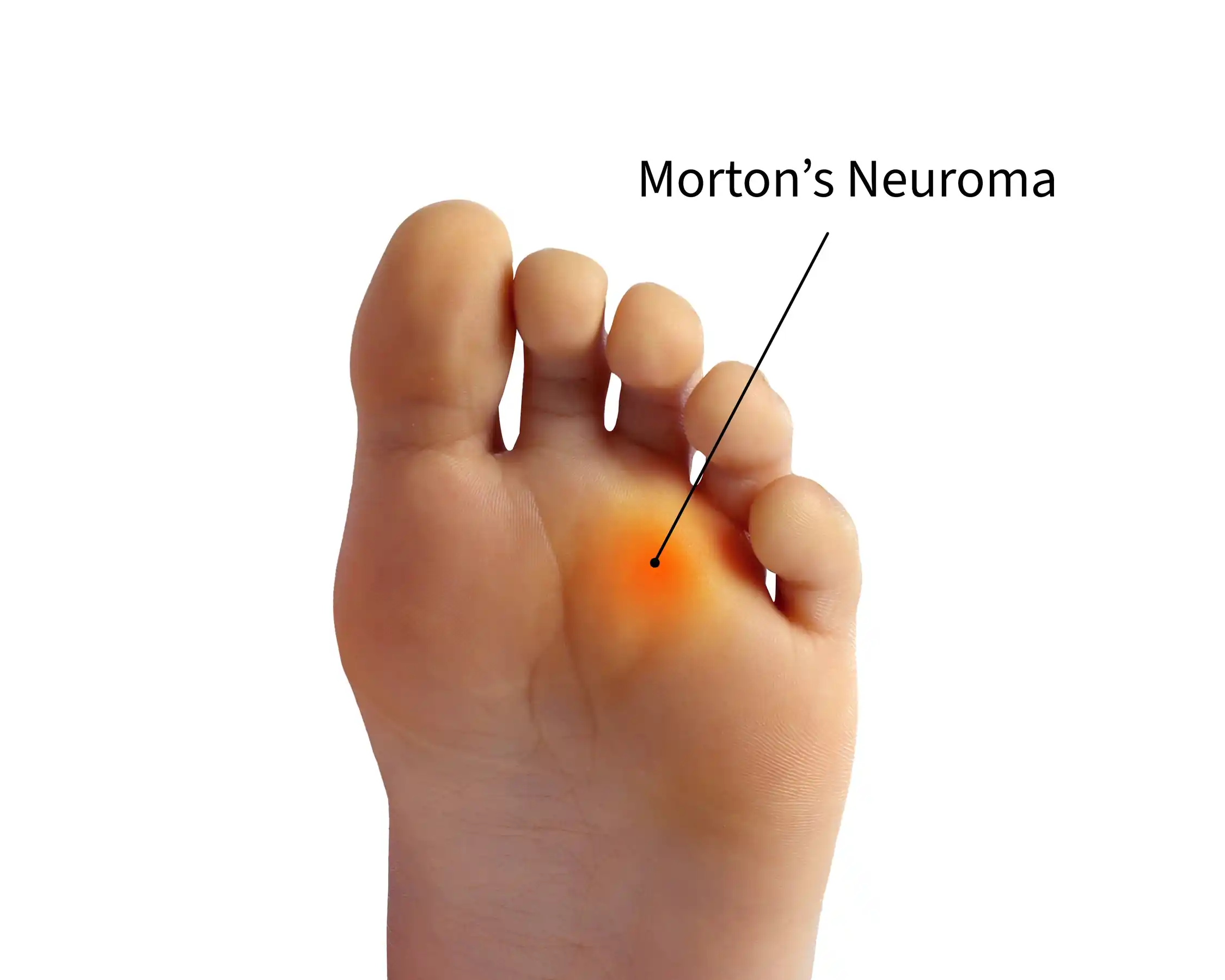
A neuroma is a thickening of tissue around a nerve, most often the nerve that runs between the third and fourth toes. Despite the name, a neuroma is not a tumor. It is an irritated, enlarged nerve that reacts to repeated pressure or friction in the forefoot (the front part of the foot, including the toes and the ball of the foot).
The most common type is called Morton's neuroma. According to the American Academy of Orthopaedic Surgeons, the condition develops when the tissue surrounding a small nerve leading to the toes becomes thickened, which can lead to pain, tingling, or discomfort in the forefoot.
How Patients Describe Neuroma Pain
Ask ten patients what a neuroma feels like, and many will use the same handful of comparisons. Common descriptions include:
- Walking on a pebble or marble. This is the single most common way patients describe neuroma pain, a sensation like a small object is stuck under the ball of the foot with every step.
- A bunched-up sock feeling. Even after checking the shoe and finding nothing there, the sensation persists.
- Burning or electric pain. Some patients feel a sharp, hot pain that shoots into the toes, especially when pushing off the ground while walking or running.
- Tingling or numbness. The toes on either side of the irritated nerve may feel tingly, numb, or like they have 'fallen asleep.'
According to Cleveland Clinic, neuroma symptoms usually start mild and worsen over time. Early on, a patient might notice minor discomfort that fades after taking off a shoe and rubbing the foot. As the irritated nerve continues to swell, the pain and tingling tend to become more frequent and more noticeable.
What Triggers or Worsens Neuroma Symptoms
Several everyday habits can aggravate a neuroma, including:
- Wearing high heels or shoes with a narrow toe box
- Standing or walking for long stretches on hard surfaces
- Running, dancing, or other high-impact activities that repeatedly load the forefoot
- Having bunions, hammertoes, flat feet, or a high arch, which can all change how pressure moves through the foot
Neuroma vs. Other Causes of Ball-of-Foot Pain
Not every ache in the forefoot is a neuroma. The table below highlights how a neuroma compares with other common causes of ball-of-foot pain, so patients have a clearer sense of what to expect at a diagnostic visit.
| Condition | Typical Sensation | Common Trigger | Visible Signs |
|---|---|---|---|
| Neuroma | Burning, tingling, or a pebble-like feeling between the toes | Tight shoes, high heels, repetitive impact | Usually none; no lump or swelling visible |
| Metatarsalgia | Dull, aching pain across the ball of the foot | Prolonged standing, high-impact sports | Mild swelling possible |
| Stress fracture | Sharp, localized pain that worsens with activity | Sudden increase in activity, repetitive stress | Swelling and tenderness at a specific spot |
| Bursitis | Aching pain with swelling near a joint | Friction or pressure over a joint | Visible swelling and warmth |
When to See a Podiatrist for Neuroma Symptoms
Persistent burning, tingling, or numbness in the ball of the foot is a signal worth paying attention to, especially if the sensation does not improve with a change in footwear. Paragon Podiatry's podiatrists, including Dr. Ernest L. Isaacson and Dr. Danielle E. Edwards, diagnose neuromas and other foot conditions using a hands-on exam and, when needed, onsite imaging to confirm the diagnosis before recommending treatment.
Ready to Find Relief? Schedule a Neuroma Evaluation Today
Living with burning, tingling, or pebble-like pain in the ball of your foot does not have to be your new normal. Paragon Podiatry's podiatrists can confirm whether a neuroma is the cause and build a treatment plan that fits your daily routine, from footwear changes to injections and advanced therapies.
To get started, request an appointment with Paragon Podiatry for a neuroma evaluation at the Manhattan, Bronx, or East Setauket location nearest you.
Frequently Asked Questions
What does a neuroma near me feel like compared to a bunion?
A neuroma causes burning, tingling, or a pebble-like sensation in the ball of the foot or between the toes, while a bunion causes a visible bony bump and pain at the base of the big toe. The two conditions can occur together, so a podiatrist visit helps confirm which one is causing your symptoms.
What causes a neuroma to develop?
A neuroma develops when repeated pressure or friction irritates a nerve in the forefoot, causing the surrounding tissue to thicken. Tight or narrow shoes, high heels, and high-impact activities are common contributing factors.
Can a neuroma go away on its own?
Mild neuroma symptoms sometimes improve with footwear changes and rest, but the underlying nerve irritation often needs targeted treatment to fully resolve. A podiatrist can recommend orthotics, injections, or other therapies based on symptom severity.
How is a neuroma diagnosed?
A podiatrist typically diagnoses a neuroma through a physical exam that reproduces the pain, sometimes paired with onsite imaging such as ultrasound to confirm the location and size of the irritated nerve.
How do I find a podiatrist near me for neuroma treatment?
Paragon Podiatry offers neuroma evaluations at its Manhattan, Bronx, and East Setauket locations. Patients can request an appointment online or call the location nearest them to schedule a visit.
